Rich and Poor in the Plant World – Part 1

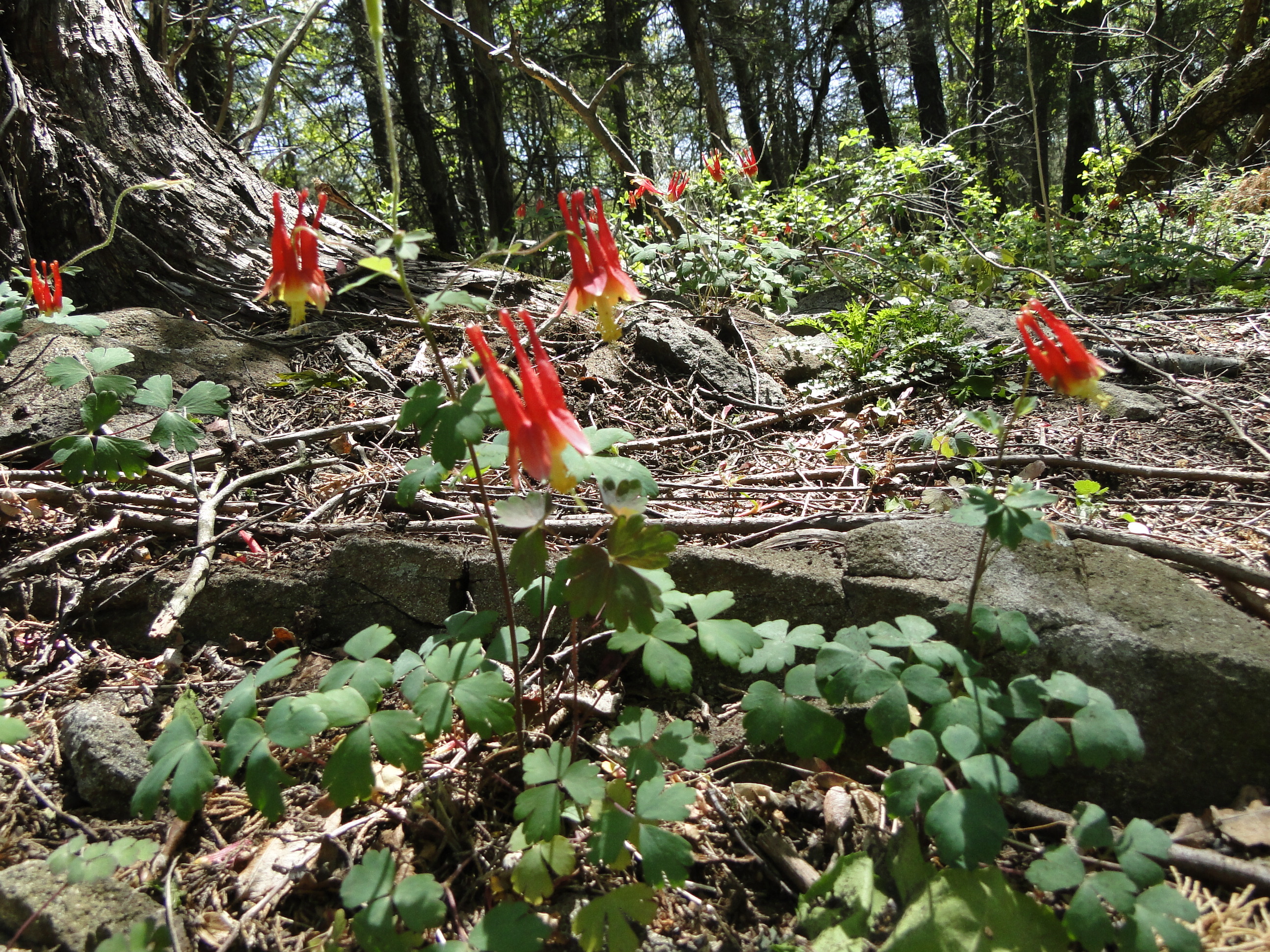
Red columbine grows in mineral -rich soil on rocky outcroppings. This thriving population was identified in Rocky Hill, at a site to become a shopping center. The plan was adjusted to preserve most of the knoll, not grade it away.

My much-loved,  old, heavy botanical manuals (e.g. Fernald and Britton and Brown)  always include a sentence or two about the habitat where a plant is found, as well as exceedingly detailed morphological descriptions.  “Found in rich soil” is a frequent description that can apply to fallow farmland, alluvial  floodplains, a bouldery forest at the base of a hillside,  or  a rocky summit with two inches of mineral-rich soil , covered with red columbines.  I used to think rich soil was rich soil, no matter where it was, with other ecological factors making the plant communities so different from each other. But I’ve learned that is only partly true.

Fallow Farm

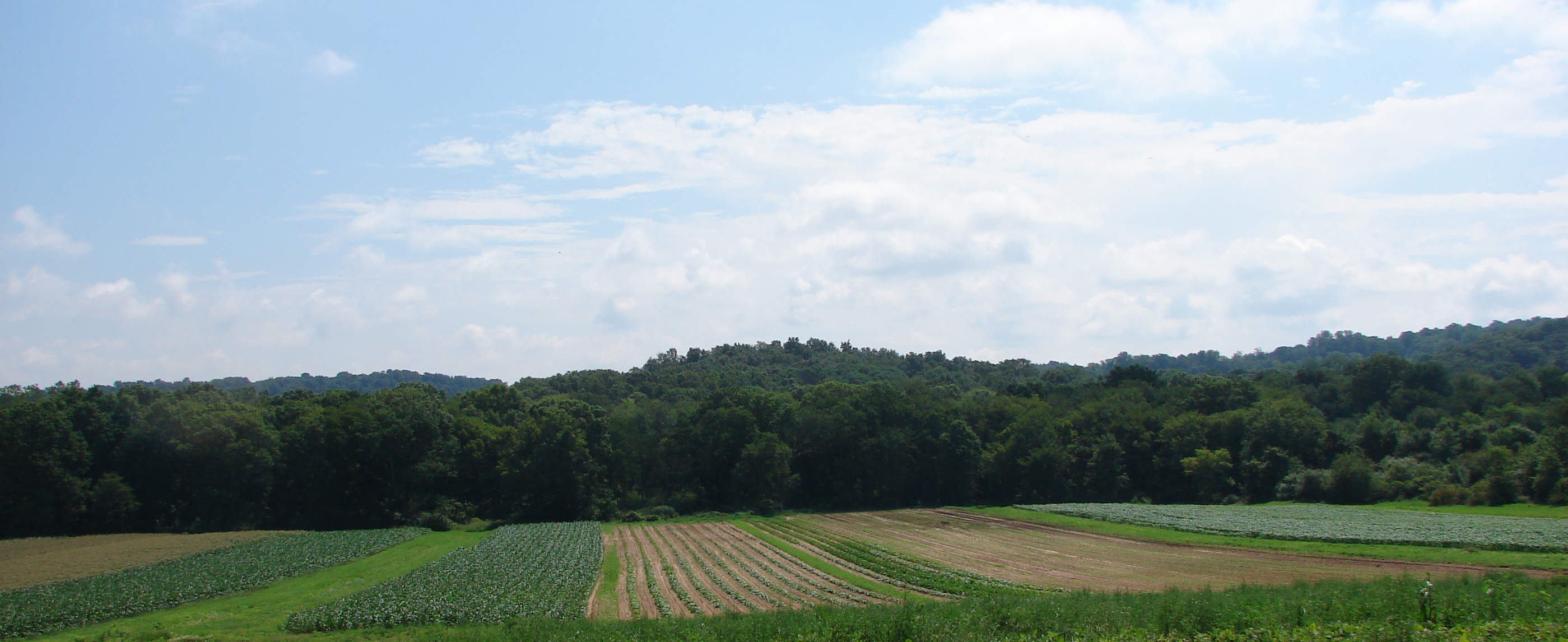
A fallow, fertile crop field supports a rank stand of annual weeds like pigweed, ragweed, and giant foxtail, that have the genetic capacity to grow tall in response to high levels of  the three basic nutrients (especially nitrogen, but also phosphorus, and potassium).  The field produces abundant birdfood, but  weed competition excludes all the wildflowers and ferns than are genetically programmed to stay short for their whole lives. Frequent plowing  also excludes native perennials.  Soils may or may not be “rich” in ninerals like magnesium and calcium.  The probability of finding rare species is very low.

Floodplain

The dominant understory vegetation in a “rich” floodplain of a large river is also thick and lush, mostly annuals like jewelweed and false nettle, though flooding and ice, not plowing excludes perennials.  Frequent deposits of fresh silt and organic matter provide an abundant supply of the three, basic common  nutrients. Especially if the watershed has traprock ridges, alluvial soil is also rich in other minerals like calcium, magnesium, and manganese, and subacidic.

Such  soil is well-suited to late-season farming.   It also can support uncommon, minerotrophic (mineral-loving)  plants, where growing space and light is available. Floodplain annuals start growing only after floodwaters  recede, and tree falls and thick deposits of sediment often  open up new bare soil patches.
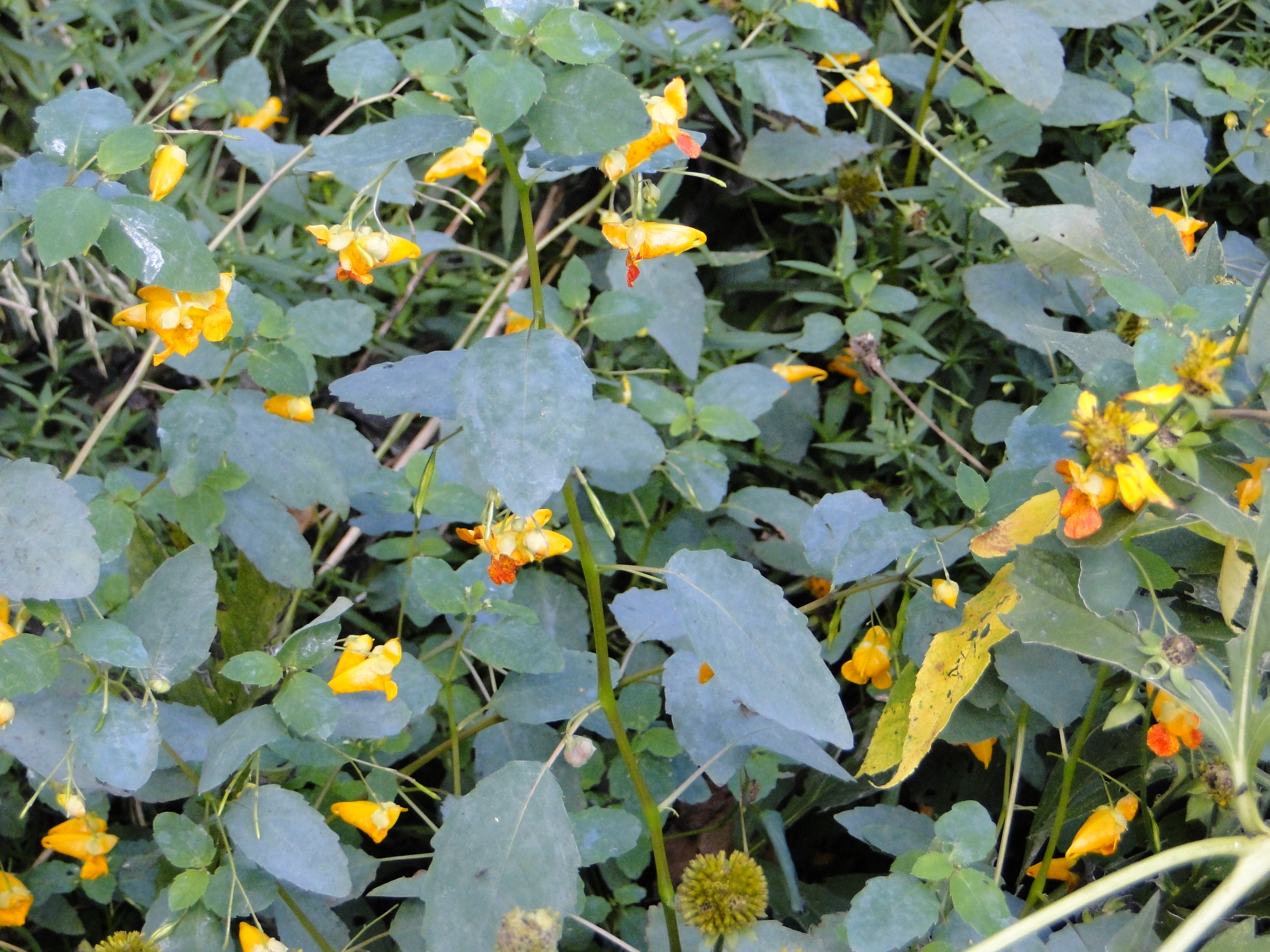
Jewelweed is dominant in alluvial soil with shale gravel, along Stocking Brook , in southwestern Berlin, Connecticut.

I have found delicate wildflowers only in early spring, before they are shaded by the rank annuals.  Dutchman’s Breeches (Dicentra cucullaria)  and spring beauty (Claytonia virginica) do grow on the banks of the Farmington River in Simsbury, with much traprock in its watershed. I also know a few rare floodplain sedges, like Davis sedge (Carex davisii),  with a vigorous,  tall growth form,  that can compete with the dense floodplain annuals – though not invasive shrubs like Euonymus alata.  Do  these uncommon floodplain plants need soil with high concentrations of minerals, with or without high availability of nitrogen, phosphorus and potassium?  Has any  research on this been published?

Base of a hillside

Another  place to find  “rich site” wildflowers, ferns  and sedges  in Connecticut is  the base of  a  hillside, among the boulders. Soil water at the base of a hill has been seeping slowly  downhill for hundreds of feet,and for many centuries,  dissolving minerals from the surfaces of soil particles and rocks. Topsoil has  also slowly washed downhill over the centuries. Slope-base soil  typically  has ample minerals and enough of the three basic nutrients, and is moist as well.  Stately bottomland trees grow in this rich, rocky soil:  sugar maple, red oak,  tulip poplar,  ironwood, and occasional basswood.   Spring ephemerals like red trillium (Trillium erectum) , bloodroot,  and trout lily  (Erythronium americanum) do most of their growing  before the trees leaf out.  However, some shade-tolerant minerotrophic plants  can keep growing  through the summer, like red elderberry and  broad beech fern – and other much rarer ones, like Goldie’s fern (which I have yet to find.)   The  understory is  less dense than in the floodplain, with less competition, and greater diversity. It still rankles me that a Target big box store was built  in this habitat at the base of a Meriden traprock cliff, without any ecological survey beforehand. It was over ten years ago, but I still boycott the store!

At the base of very long  seepage hillsides, soil water has the highest mineral concentrations,  and the slope-base plant community is potentially most diverse. The reason is simple, as I was taught by my major professor Ton Damman: the further the groundwater travels, the more minerals are dissolved.  I  recall an amazingly diverse  swamp at the base of a great hill in Winsted, Connecticut, west of Route 8.  We measured the nitrogen  levels, and they were quite low. Vegetation was low in density and stature, however, not a rank, impenetrable  thicket.  This allowed diverse, minerotrophic plants to coexist, including  melicgrass (Glyceria melicaria), chestnut sedge (Carex brunnensis), and a dwarf raspberry called Rubus pubescens.

Rocky Outcroppings

This year I  found these same plant species – and also Dutchman’s breeches  – on several  shale outcrops  in the  East Berlin geologic formation.  The laminated  shale rock structure increases surface area available for mineral dissolution. Positively charged cations (e.g. calcium and magnesium)  enter the soil water and increase the pH.  Subacidic soils derived from traprock, limestone, or shale  have the highest mineral levels, and  support diverse and interesting  plant communities.  Minerotrophic   plants are most likely in areas with subacidic soils, in large part because higher pH makes minerals more available to plants.  (This is the reason that farmers apply lime.)

Brittle fern, an uncommon minerotrophic species of rocky habitats is growing out of a shale rock face along an incised stream , Stocking Brook in Berlin, Connecticut.

Characteristic plant species, uncommon  in other habitats, as well as truly rare, state-listed species,   are also often associated with  ledges, outcroppings, and  crevices of  rock formations, regardless of bedrock type. Botanizing is always rewarding in such habitats! I often find red columbine (Aquilegia canadensis) on traprock summits,  but sometimes also in areas with  a metamorphic  outcrop of gneiss or schist.     Dwarf saxifrage, Dutchman’s Breeches, Canada moonseed (Menispermum canadense), and red elderberry (Sambucus racemosa), and brittle fern  grow at the base of a low traprock cliff  near Kensington Road in Berlin.  The first four species I  often see in  undisturbed trap habitats, but rarely elsewhere.  The brittlefern (Cystopteris  fragilis) is rarer, but less tied to traprock.  The only orange-fruited horse gentian (Triosteum aurantiacum)   I have ever seen was at the base  of  a sandstone shale rock face, but they have also been found on coastal bedrock outcrops in Branford.  Rare prickly pears  (Opuntia humifusa) have been found in Old Saybrook on bedrock outcrops on “The Preserve” property; this is  probably because the open, southern exposure mimics the warmer growing conditions at the center of its range., and may – or may not – be also related to mineral-rich soil.
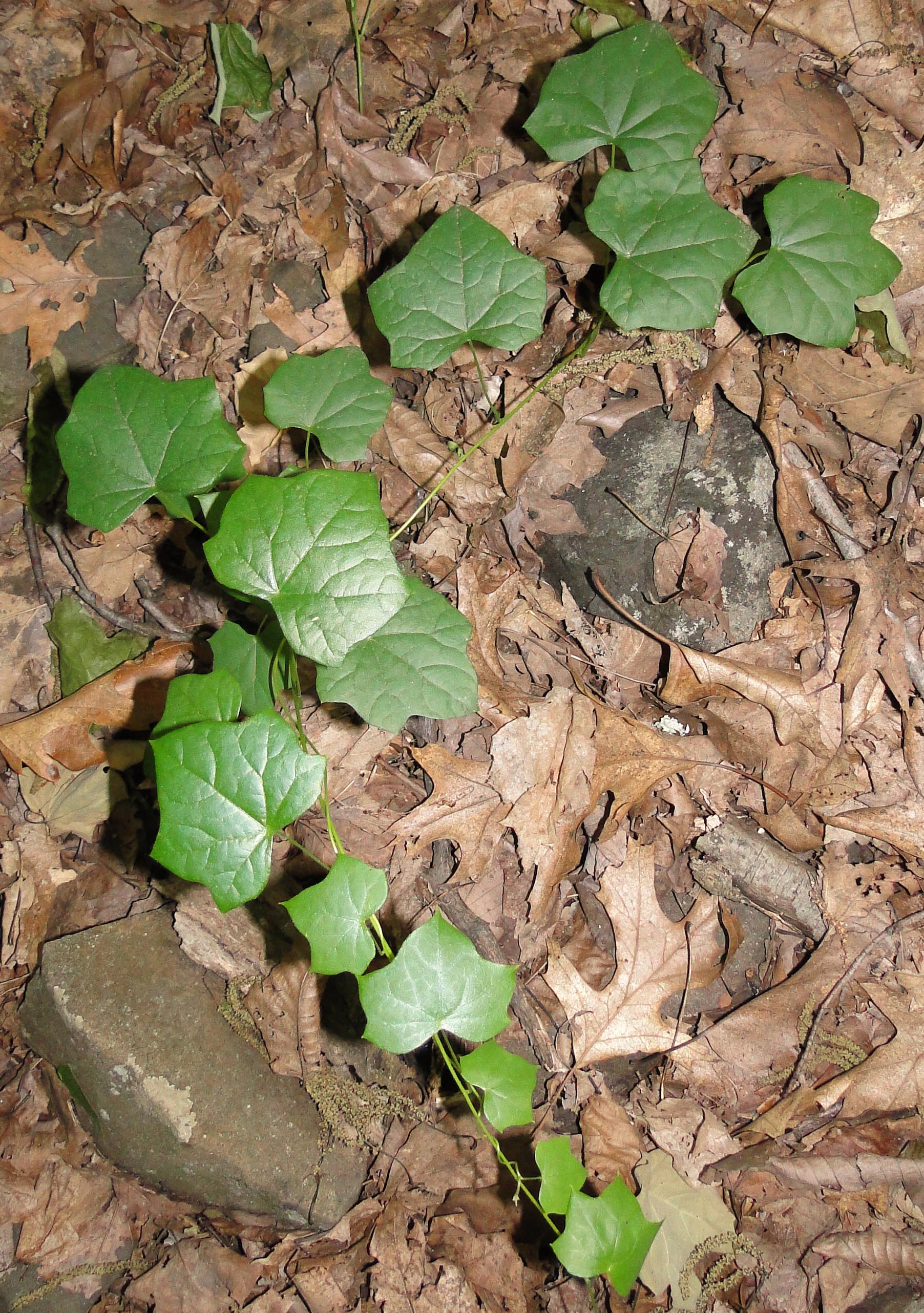
Seedling of a Canada moonseed vine, in moist, rich soil at the base of a basalt rock face; north end of Cathole Mountain, Kensington Road, Berlin.


Questions

The term minerotrophic is widely used, but solid data is lacking as to exactly which minerals are needed by which plant species, and at what levels.  What are the relative roles of microclimate and soil mineral needs, as they affect plant  distributions on rocky summits and outcrops?    How often is the distribution of a “rich site”  species limited, not by soil composition, but rather  by competition with other plants?   Many  uncommon plants are known to be characteristic of rocky habitats.  How often is this  due to the role of rocks and boulders in reducing competition, rather than mineral availability?  To what extent are “rich site” plants found along slope bases or on “rocky site” plants on summits because  the areas were historically too bouldery for farming, so that the plants remain there, but were long since eliminated elsewhere by  agriculture?   A telling comparison is the nearly pristine, and botanically diverse, forested  north slope of the traprock ridge at Dinosaur State Park, versus the depauperate east slope, which has been farmed for over a century.  Parts of this this field  are  infested by invasive Japanese barberry and burning bush, and the dominant ground cover is the prickly dewberry, a very common dry-site plant.  But even this field, also supports populations of uncommon plants  like Carolina rose and panicled bush clover, growing in sweet (subacidic), mineral-rich soil with traprock near the surface.

These are opportunities  for interesting ecological research!  We really have not advanced very much past the “rich site”  or “rocky site”  habitat  characterizations in the old botany manuals.
 

Transplanting Soil Blocks, a Biodiversity Rescue Tool

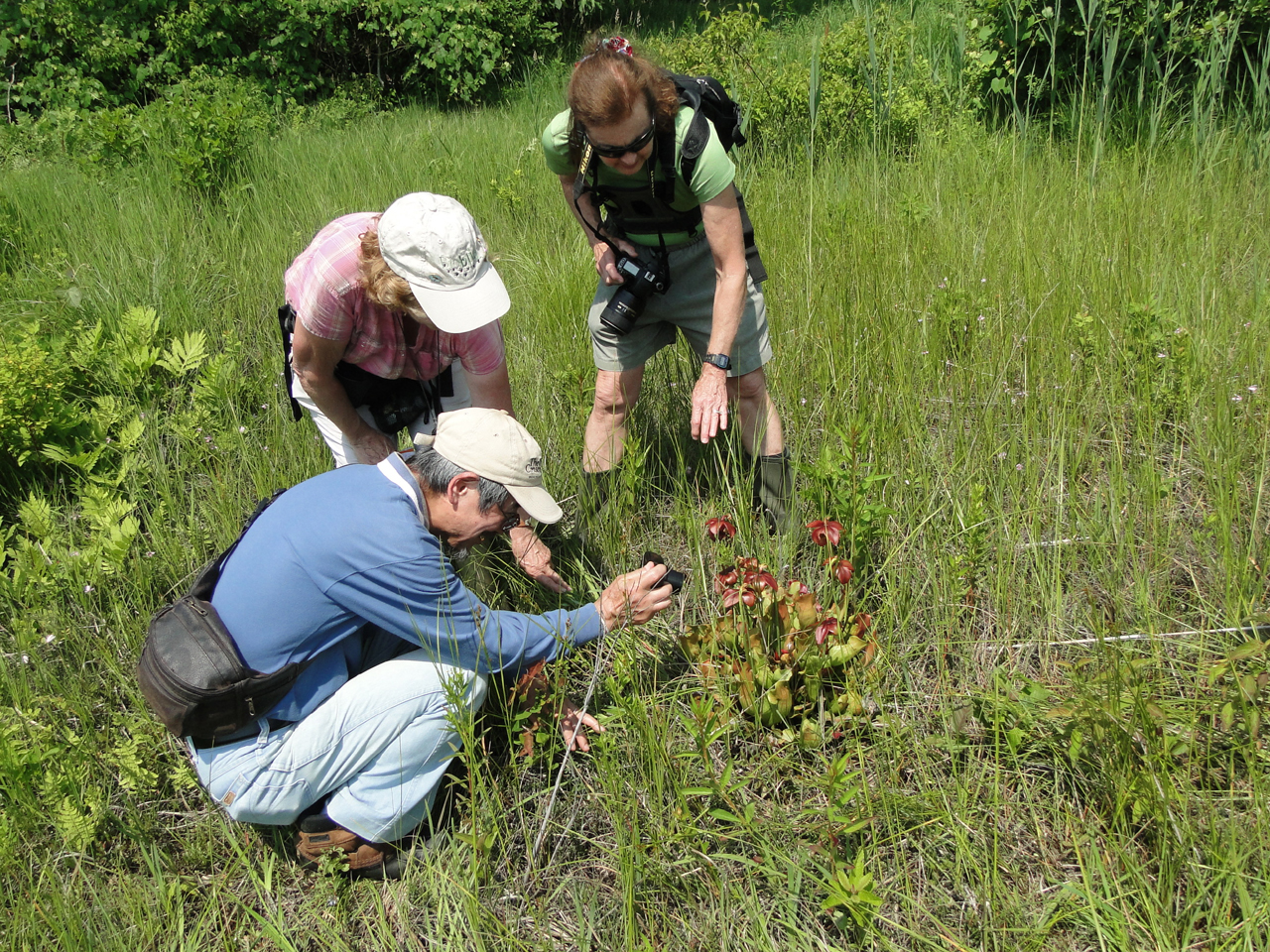
Several other state-wide rare plants are common in this former cranberry bog.

This past Spring (May and June 2012) a group in south central Connecticut transplanted many blocks of peat soil, about 20″ X 20″, with very rare Adder’s Tongue Fern (Ophioglossum pusillum).  This is  an attempt to salvage the population from an area that is to become an active cranberry bog again, after many years of lying fallow except for mowing. The soil and vegetation blocks also contained the rest of the ecological community:  royal fern, assorted sedges, rushes, and wildflowers, countless microorganisms,  invertebrates,  and –  not to be forgotten –  a seed bank. Watering and monitoring continues.

The destination area was  closer to the road, also former cranberry bog, but still fallow. When choosing a location to place a block, great care was taken to replicate hydrology and aspect, though peat depth could not be replicated; the organic horizon was substantially deeper in the source area.  It took over 100 man-hours of back-breaking labor by Carol Lemmon, a Board Member of the Connecticut Botanical Society,   and half a dozen others (mostly volunteers)  to move the population from the future cranberry cultivation area.

Maintaining the former cranberry bog as a wet meadow, rather than letting it revert to a red maple forest, requires regular  mowing.  Meadow, as a wildlife habitat, is in much shorter supply in Connecticut than forest.  Phragmites australis control was also needed. This invasive would have completely overrun the entire diverse botanical community without expensive eradication. Fortunately with multiple rare and uncommon species, including several species of gorgeous  pink orchids, funds have been found for  the aspects of rescue, maintenance,  and restoration  that need paid skilled workers.  The biodiversty and beauty of the unusual peatland wet meadow  motivate volunteers to  donate  most of the man and woman power for execution of the rescue operation, as well as restoration and ongoing maintenance.

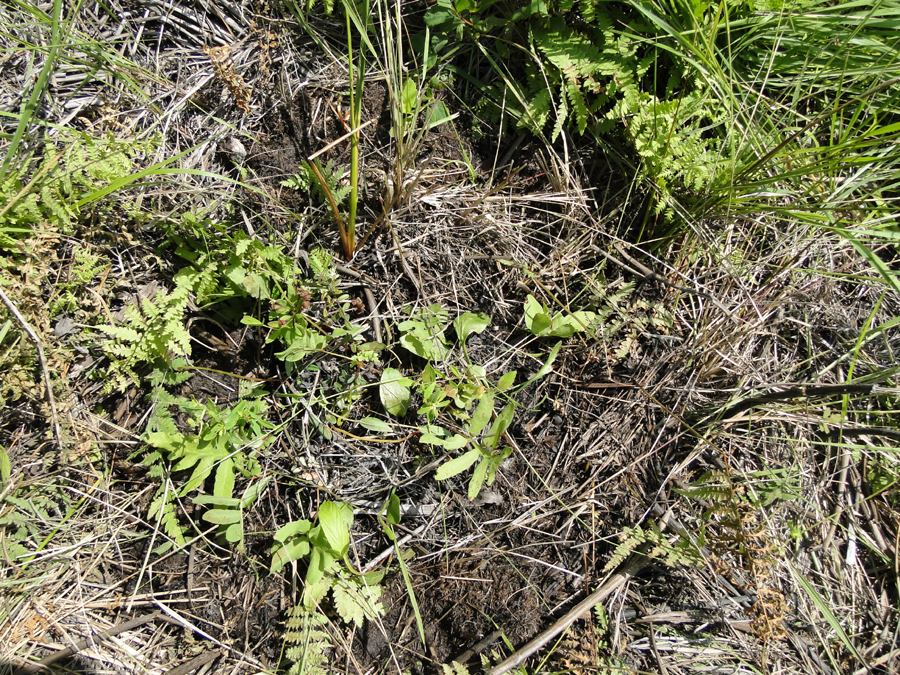
The Connecticut Threatened Adder’s Tongue has a simple, ovate leaf with a pointed tip, entire leaf edges (no teeth,) and is only abut two inches long.  Its flower is a plain green spike, rather like a plantain flower. Adder’s Tongue looks for all the world like a Canada Mayflower leaf with a plantain flower.  The photos below include  a transplanted block with a few such leaves.  For a clearer image, just google the scientific name. Blooming Pitcher Plant and some Rose Pogonia orchids are also shown.

I apologize for not including the location of this worthy project, quite likely to succeed, but it is CTDEEP policy not to divulge locations of rare species, for their future safety.

Ambitious rescue operation for one of the last populations of a Connecticut-Threatened plant species
A population of CT Threatened Adder’s Tongue was transplanted, soil block by soil block into this wet meadow, from another nearby boggy wet meadow, soon to become a commercial cranberry bog again.

Trace Minerals & Toxins: GMO Concerns

Why does food grown organically seem to taste better than conventionally grown food. Is this my imagination or due to some real difference? I read that levels of trace minerals (micro-nutrients) were usually lower in non-organic food. This makes sense for hydroponic foods, but why should conventional agribusiness crops have lover levels of trace minerals?

Truthfully, I’ve been somewhat sceptical about health and safety risks from GMO (genetically modified organism) crops? Inserting genes for disease resistance does seem sensible. The Environment Committee of the Connecticut Legislature happens to be reviewing a bill (HB 5117) that would require labeling all such food, so I read Hearing testimony and did some research.

A recognized concern, from a health and environmental standpoint, is the gene that has been spliced into crop plants, for a persistent bacterial toxin (from BT or Bacillus thuringensis). This toxin is now found in the blood of the majority of American women. It is a natural pesticide that attacks cell membranes – not just in the target pest caterpillars, but also membranes in rats and potentially in humans, especially fetuses. However, I did not see any data on toxin concentrations, and information on threshold concentrations for harmful effects is sorely lacking.

Analysis of potential impacts on adjacent ecosystem biodiversity from BT GMO crops has also been wholly inadequate. How will populations of economically insignificant species of caterpillars, moths and butterflies -and their predators- be affected by feeding on leaves and pollen from GMO plants along field edges? Ill effects on migrating monarch butterflies were in the news last year.

I see even less less public concern with the largest category of GMO crops: those with an inserted gene that makes them “Roundup Ready”, able to tolerate its active herbicide ingredient, glyphosate, although application rates must be cranked up several fold. Interference with uptake of micro-nutrients by glyphosate was studied in Stuttgart, Germany, at the University of Hohenheim, over ten years ago. German researchers warned us that mineral-deficient plants would be more susceptible to soil fungal diseases; this is now well documented for many fungal diseases – most recently widespread Fusarium wilt in GMO Roundup Ready soybeans in the southern US. The Stuttgart scientists found two causes of the problem: 1) glyphosate firmly latches (chelates) onto soil trace minerals, making them unavailable and 2) it eliminates or suppresses soil microbes and invertebrates. These include beneficial mycorhizal fungi) which help the plant extract soil nutrients (trace minerals included), and earthworms, springtails, isopods and man other soil organisms that recycle nutrients from plant debris into soil (trace minerals included). [As glyphosate is only one of many agrichemicals that suppress populations of soil organisms, my first question was answered; I can now see a scientific basis for lower levels of trace minerals in non-organically raised foods!

Because Roundup application rates increase sharply when GMO Roundup Ready crops are planted, this micro-nutrient problem has become more severe. Scientists at several US midwestern universities followed the lead of the Stuttgart researchers, including Don Huber at Purdue in Illinois, Barney Gordon in Kansas, and Kurt Thelan in Michigan. They have continued to investigate the trace mineral deficiencies, particularly manganese, but also zinc and others, that are an unwelcome side-effect of Roundup use (glyphosate). [The URL of a review article is http://www.environment.co.za/gm-foods-crops-biofuels-pesticides/missing-micronutrients-glyphosate.html. It was posted out of Western Illinois University by Enviroadmin on Sunday, 23 May 2010.}

It is now also known that the inserted gene in GMO Roundup Ready soybeans interferes with production of a root secretion that solubilizes minor mineral nutrients. (This is in addition to glyphosate directly chelating micro-nutrients, and suppressing or killing beneficial soil microbes and invertebrates.) Attempts to cope with the problem by fertilizing GMO Roundup Ready crops with heavy dosages of micro-nutrients have been challenged by the chelating (tight-attaching) properties of glyphosate. Similarly, human assimilation of mineral supplements in pill form is usually poor, unless the dietary supplements are bulky and food-derived! I, for one, balk at swallowing horse pills three times a day.

Nor has there been adequate analysis of the impacts on surrounding ecosystems of expanded Roundup use on Roundup Ready GMO crops. How much has it reduced the extent of field edge buffers with grass and forb (“weed”) seeds that used to be available for songbirds? Such buffer strips between and around fields are still available in a sustainably managed organic farm. More and more weeds are evolving resistance to to glyphosate; the response is accelerated efforts to develop GMO crops resistant to other herbicides, that have their own suites of risks and side-effects – which will also not be adequately tested as this is not yet required by EPA.

I can envision genetic modification for the purpose of inserting blight resistant genes from related plant species or perhaps to improve crop quality, but only after far more rigorous testing than is the current practice – directed by a third party entity (not Monsanto Corporation testing its own GMO crops!). But inserting genes for herbicide tolerance – or insecticidal proteins – seems fundamentally unwise. Expansion of organic agriculture is important for the human diet as well as for the surrounding natural environment; not just to avoid possible pesticide residues, but perhaps more importantly, for the sake of nutritional quality.

A version of this post was sent to several Connecticut members of the Environment Committee, and published by CT NOFA (Northeast Organic Farming Association)

Link: http://environmentalheadlines.com/ct/2012/03/18/a-letter-to-ct-nofa-folks-from-a-farmer/


Water Woes on Drumlins

What is a drumlin anyway?  A gremlin with an aptitude for percussion?   Seriously, a rounded, elongated hill in the Connecticut landscape is probably a “drumlin”. The best known is Horsebarn Hill on the eastern side of the UConn campus at Storrs. Landing Hill in East Haddam was  in the local limelight several years ago. Lately I’ve been working on Meetinghouse Hill and Misery Hill in Franklin.  The Goshen Wildlife Management Area is another. The word “drumlin” comes from Ireland, where this land form also occurs.

The core of a drumlin hill is fine-textured, compact glacial debris, though bedrock may be underneath, poking through in a few places.   The compact “hardpan” layer (in common parlance)  may be over 100 feet thick, and dates from the prior Illinoisan glaciation (over 128,000 thousand years ago). Only the top layer, usually just a few feet deep, is sandier, looser soil, formed from the melting ice masses of the more recent Wisconsin glaciation, underlain by the compact till (scientists’ terminology).

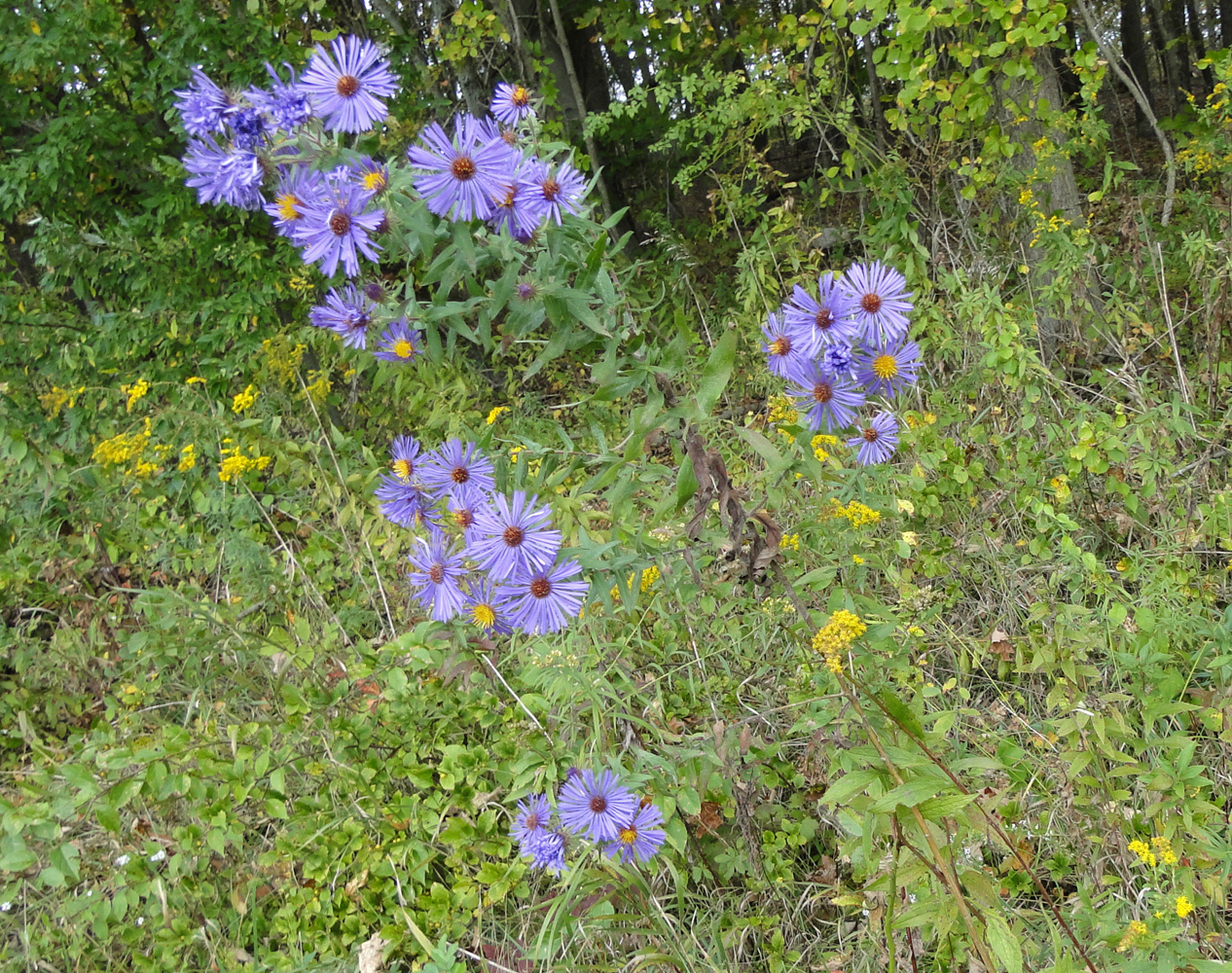
These soils are seasonally wet.  Though the level summits seem, at first glance, to be well-suited to community development, they are challenging to develop, whether on drumlins or elsewhere, such as plastered onto the sides of traprock ridges. Most gently sloping drumlin hilltops in New England used to be productive hayfields, growing lushly in spring when soil moisture was available, going dormant in mid summer.  Pockets of wet meadow were rich in flowers, like New England Aster. Drumlin fields make fine hunting territories for raptors like barred owl.

Colorful wet meadow perched on top of drumlin.

Multiple seasonal seepage wetlands and headwaters streams flow down drumlin hillsides. They are a valuable source of clean water for the drainage basin if the drumlin is undeveloped, they but may become conduits for construction runoff.

There is more groundwater discharge on the nearly level sections of drumlin hillsides than on the steep sections. These are also prone to septic breakout.

Only a small percentage of Connecticut’s soils are compact tills but a disproportionate share of construction site fiascos and problem-plagued new subdivisions occur on hardpan soils. Wet, silty, sticky  hardpan  soils, on drumlins and also in other landscape settings,  can become a mire for heavy construction equipment because the snowmelt and spring rains “perch” on top of the hardpan. Saturated silty soils are highly erosive,  often an erosion control nightmare. Flooding problems are more severe than on absorbent soils, and water pollution from lawns and septic systems becomes a problem at lower home densities.  Break-out from home septic systems happens more often.

Typical complaints of drumlin residents: wet and moldy basements, icy sidewalks;  soggy, fungus-infested grass, burned-out grass, and dying shade trees; extended sump pump operation (not energy efficient), mosquitoes, and septic odors; and polluted down-gradient ponds.  These all become more of an issue for seasonally wet, drumlin soils, because more water stays at the surface, as it cannot soak into dense hardpan soil. (Runoff coefficients are higher, in engineering jargon.)

With careful home and septic system placement, curtain drains, and appropriate landscaping, one can avoid some of these problems – but only if home densities are relatively low.

Ironically, the loose upper soil layer of a drumlin is usually so shallow that it holds little reserve water during dry spells, so drumlin lawns need much irrigation in summer, though excess water is the problem in other seasons.   Solutions: small lawns, partially wooded yards, and/or a meadow landscape with drought-tolerant grasses like Little Blue Stem, a.k.a. Poverty Grass.

A Plea for Guidance

Could  CTDEEP and our Conservation Districts provide land use boards, planners, and developers  with more guidance on drumlins’  multiple constraints?  On-line mapping (Web Soil Survey or WSS) available from the Natural Resource Conservation Service (NRCS) does show the approximate locations of seasonally wet, hardpan soil units, like the Paxton, Woodbridge, and Wethersfield soil series.

More guidance is needed to make sure fertilizers and pesticides are not applied before or after heavy rains.  This happens all the time in Connecticut suburbs!  Turf chemicals tend to run off drumlin soils, more than off more absorbent soil types, especially when the soils are already soggy.

Few understand that watercourse setbacks often need to be wider and  septic system densities need to be lower on compact till soils, to protect down gradient wells, headwaters streams, pools, and lakes from excessive nitrogen,  in nitrogen enriched groundwater and runoff. Because they reduce lot yields, these constraints need  explanation in an official DEEP guidance document, preferably also in a  CT Health Department memorandum!

Clear-cutting may seem to be  more economical for the developer, who should be warned that this is not wise on a drumlin!  To minimize future “water woes”,   maximize  remaining tree cover when subdivisions are built. The reason is two-fold: 1) to slow the velocity of the falling rain, and 2) because trees spew thousands of gallons of water into the air as water vapor (transpiration), helping dry out those surface soils.  After clear-cutting, a drumlin hillside that used to be wet only in March and April may stay wet to the surface though June – and before long, one will see the tell-tale mottles and grayish matrix color of a jurisdictional Connecticut wetland soil.

Some, but not all engineers use underdrains and clay stops  to prevent frost heave damage to roads and utility pipes, and to allow shallow groundwater to continue to seep down slope to wetlands that depend on this water source – instead of being shunted along  roadbeds and sewer lines.  Guidance is also needed in this area.

Once aware of drumlins’ constraints and resources, town  zoning boards  will be able to  guide development more appropriately,  protecting valuable vernal pools and hillside streams, and at least a portion of the productive forests. For expansive overgrown fields on flat-topped drumlins, if the alternatives of farmland or grassland wildlife habitat are not possible, at least the damage to down-gradient headwaters resources,  from a  low density, large-lot residential community, with small lawns,  will be  much less than from a large, dense subdivision.

(First version of blog posted on 9-6-08)

The Red Menace

Euonymus alata, also known as burning bush, is at least a clear-cut villain, unlike  some of the other invasives.    I recall spending a long June day collecting vegetation data in an an immense Euonymus thicket, a former estate  in Wilton. I did not even  observe a catbird, the most common thicket songbird in Connecticut! And beneath the dense bushes, the ONLY plants growing were Euonymus  seedlings.

This species must have high-powered chemical defenses. The glossy leaves look almost artificial (and might as well be), no holes where caterpillars or leaf beetles have nibbled.  Pickings are slim for foliage-gleaning parent songbirds.  No “chain migration”  for this species with a suite of nearly pre-adapted species waiting in the new world, to make use of the new immigrant – and keep it in check, as has happened with the cherries.  Gray’s Manual of Botany (Fernald) shows only two  native  cousins  in this genus, and neither has a range that overlaps southern New England or Long Island.

Euonymus alata, from Asia,  is an effective invader of forests, because it grows well in shade, unlike bittersweet, multiflora rose, everlasting pea, and Phragmites. It spreads well by runners as well as seed. Unfortunately, it thrives especially in the mineral-rich, sub-acidic  soil of traprock (basalt)  ridges.

Euonymus has overrun much of Peck Mountain, in north Cheshire,   because suburban yards on the flanks of the traprock ridge provide abundant seed sources.  As recently as the mid 1980’s the ridge crest and its steep talus slopes were botanically  diverse and special. At that time they were clear-cut  CTDEEP Critical Habitats, per the CTECO website (sub-acidic forest,sub-acidic talus slope, and sub-acidic summit  catgories.) Since then, these habitats  have become near monocultures of burning bush. The Euonymus even thrives in shallow soil pockets on ledges!  Some rare Staphylea trifolia  (bladdernut)  and marginal wood fern remains on the steep west slope  of Peck Mountain, and I last year I noticed a single non-blooming columbine patch.  The oak fern, dwarf saxifrage, and anemonella appear to be gone.

After that Wilton experience and a recent  eye-opening hike on Peck Mountain,   I knew we had to get rid of the burning bushes in our own yard. Emotionally, it was not so easy.  This is a beautiful shrub, especially when crimson in the fall, and it makes a dense, tidy hedge.  The wings or flanges on the stems also look interesting in winter.  Our bushes had special meaning because they been given to us by relatives who were dear to us.

Control  was very quick and simple, from a practical standpoint. We snipped them with a lopper, and painted the freshly cut stems  with Brush-B-Gon (8% triclopyr). For those who simply cannot kill their prize burning bush, thoroughly shearing off the seeds each September, with hedge clippers,  will at least prevent further spread by birds.

Connecticut nurseries are still battling the environmental regulators, to prevent an outright ban of Euonymus alata, because this is such a popular, lucrative species for  the landscaping business, especially for commercial sites.

For illustrations and discussion of other invasive plants, see the accompanying facebook album “Invasives- A Devil’s Advocate Perspective” (Sigrun Gadwa)

http://www.facebook.com/media/set/?set=a.496792513908.273505.588968908&l=ac65ae4d58

Origins of the Traprock Ridges

The extensive ridgetop hiking trails in central Connecticut are fairly well known, with their fine views, blueberries, and sunflowers, e.g the trails on East Rock, West Rock, Mount Higby, the Hanging Hills,  Cathole Mountain, and Ragged Mountain.  However, remarkably few people who live here realize that the Metacomet and other ridges are  of volcanic origin.  Why isn’t this  part of every high school earth science  class? The geologic processes described below have created a rugged landscape with mineral-rich, subacidic soil,  steep talus slopes (fields of basalt chunks), cliffs, and exposed rock outcrops;  these are all habitats for unusual flora and fauna, including rare species – another fact that is not widely known.

View from the southwest of Cathole Mountain (south end of the ridge, in  Meriden)

Connecticut does not have cone-shaped mountains that once rumbled and spewed ash and lava. Instead the lava oozed more slowly from deep, elongated cracks, that started forming 200,000 years ago, when  the supercontinent, Pangaia, began to pull apart.  Tension between the freshly separated continents caused two elongated cracks (faults) to form. The land settled between two deepening faults, creating a rift valley.  Molten lava oozed up through the deepest cracks and spread across the valley, and then cooled and hardened into traprock (basalt). Three separate periods of lava flows formed three beds of variable thickness.  The middle bed (Holyoke Basalt) may be hundreds of feet thick.

The valley gradually filled with sediment eroded from what used to be high mountains in eastern and western Connecticut. The eastern and western highlands are still many hundreds of feet higher in elevation than the lowlands of the Connecticut valley.  Each successive bed of basalt (cooled lava) was buried by sediment that was compressed into a reddish-brown sedimentary rock, known as brownstone or New Haven Arkose. Total deposition was two miles thick at the Eastern Border Fault in Middletown.  Climate conditions at that time were tropical, which accounts for the red, oxidized color of the sedimentary rock and its low mineral content.[1]

Because the rift valley was still deepening along the Eastern Border Fault (often called the “trapdoor”), the rock beds all tilted down to the east, by 15 to 25 degrees.  The broad basalt beds were glued together by sedimentary brownstone.  Eventually the beds  broke apart into multiple, tilted  “sandwich” chunks.  Over time, especially during the periods of glaciation, the  process of erosion exposed the higher, western, “up-tipped” edges of the these basalt beds, since  traprock is considerably harder than brownstone. The sedimentary“glue” weathered away between the layers of basalt rock. The western edge of each broad basalt slab became a basalt ridge.  A traprock ridge  typically has cliffs and steep talus fields on the west side, and a gently sloping eastern slope,  corresponding to the original easterly tilt of the rock formation.

 The ridges often show an interesting triplet pattern: a central taller ridge corresponding to the thick bed of Holyoke Basalt, is flanked by two much lower parallel ridges, corresponding to the thin slabs of Talcott and Hampden Basalts).  The far north end of Cathole Ridge shows this pattern very clearly.

Most of our  traprock ridges originated as described above, from the western edges of cracked, tilted  lava slabs. However, some “intrusive” formations like Sleeping Giant and West Rock[2] were formed underground. The oozing lava cooled slowly underground, rather than on the surface. In this slow-cooled rock, called diabase, crystals are larger and visible to the naked eye. The  rock weathers more slowly, but mineral composition is identical to basalt. These intrusive ridges were buried by sediment and then exposed by weathering and glacial scour, just like the basalt ridges.

Central Connecticut’s  continuous, above-ground traprock ridge system extends northerly into Massachusetts, but cracks in the rift valley oozed lava as far north as Newfoundland.  Intermittently exposed basalt also occurs in Newark and Hoboken, New Jersey (the Palisades) and further west in the Pomperaug valley in Southbury and Woodbury, Connecticut.

The sub-acidic, volcanic soil on traprock ridges is fine-textured and less acid and richer in minerals, like calcium, magnesium, and potassium- than soil derived from brownstone, granite, gneiss or schist.  Second, the thin soil, rocky outcrops, talus,  boulder fields, and steep slopes are specialized ecological conditions quite different than that found in lowland forest, and are associated with a unique suite of plants and animals.

Partly open glades are characteristic, The “lawn” is actually Pennsylvania sedge, which remains low, naturally. A characteristic suite of plants (besides Penn Sedge) grows in this habitat.

These ecological communities have been designated  as high priority “critical habitats”  by CTDEEP.  However, like  the low public awareness of the ridges’ unusual volcanic origins, public awareness of the traprock ridges’ high conservation value seems surprisingly low, even in the towns where the ridges are major landscape features, like Meriden, Berlin, Cheshire, and New Haven.

Footnotes

[1] An infertile “tropical” soil with a reddish color forms from brownstone parent material unless it is enriched by basalt glacial till or by river sediment.   The well weathered soils of the tropics are also known for their red color.

[2] The name of West Rock (in West Haven and Hamden) changes moving northward, first to Prospect Ridge,  and then to Peck Mountain in North Cheshire.

Photos of the five critical traprock habitats  may be viewed via links to public facebook albums (Sigrun Gadwa).

  • album1    West Peak Summit in September – CT Botanical Society Excursion
  • album2    Traprock Ridge Natural Resources of Central Connecticut
  • album 3   Wetlands Below Traprock Ridges
  • album 4   North end of Mount Lamentation
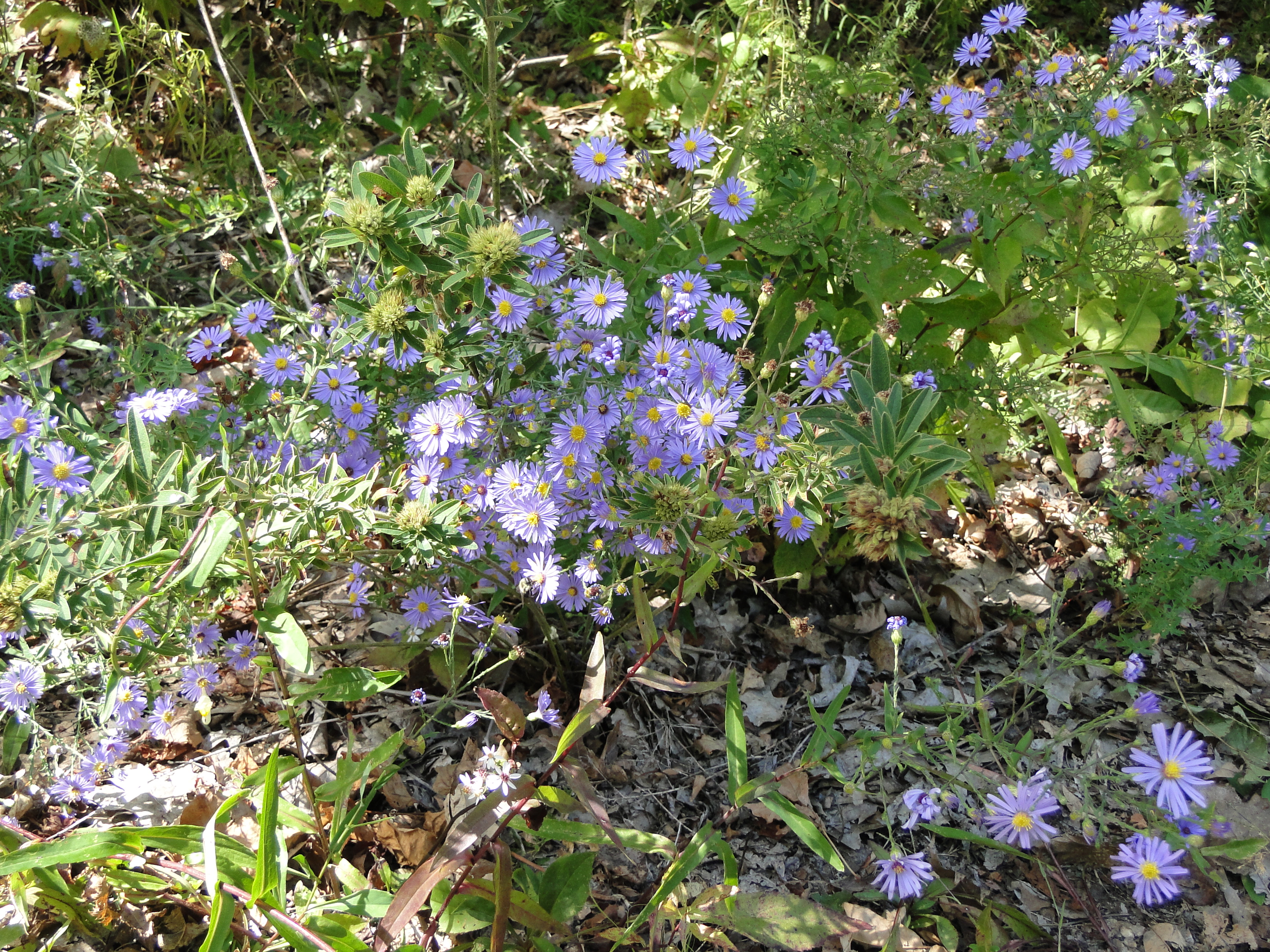
Symphiotrichum laevis is a spectacular, densely flowering, dry-site aster found on traprock summits.


Rose Maze

Yesterday at dusk I was near downtown Wilton, at the site of a future apartment building.  I was trying to get out of  an approximately  2-acre thicket of invasive shrubs and vines, after characterizing them. It was raining hard, so I was clutching my glasses, trying to protect my notebook. (Had not put on the uncomfortable rain jacket, as it wasn’t raining yet when I started my field work.)

Five times I painfully pushed towards the outside, only to reach either a chain link fence, a truly impenetrable mound of multiflora rose, or a pile of logging debris – so I retraced my steps. I prayed on and off, felt like Tom Sawyer trying passage after passage in the cave. Or Sleeping Beauty, having woken up on her own, trying to escape through the thicket of roses that had grown up around her palace.  I remembered another consulting job site:  a tall, impenetrable multiflora thicket surrounding  a small  farmhouse occupied by an elderly  widow. Mowing had ceased when her husband had died.

Eventually, a patch of stately, thorn-free Japanese knotweed (like bamboo) was my gateway to the road and safety, my “prince”. I am so grateful to this grove of invasives, although Jap. knotweed is one of the most villified.

Growing up, I always thought of this plant as a privacy hedge, because the womens’ outdoor shower at the Nissequogue Point Beach Club was shielded from the prying eyes of outsiders by a knotweed thicket. Half a century later, I returned to find the same cold shower and the same dense thicket with large heart-shaped leaves. What a persistent monoculture! Overtime the knotweed at the Wilton site might well replace the multiflora rose (that is if the apartments weren’t built). At least it’s handsome, with bountiful nectar, welcomed by insects in late summer, when pickings are slim elsewhere (before all the goldenrods are in bloom.)

This is the king of the clonal perennial species, and the hardest of all the invasives to eradicate. Even after aggressive herbicide application, sprouts will come up the next year … and the next.  The latest control technique is to drill a hole into  every  tough, hollow stem in the knotweed patch and then inject herbicide into the hole; repeat for three successive years.

Milky Spore Mystery

In about 1990 we applied Milky Spore to our lawn, just once, in the fall, after several years of  trapping Japanese beetles  in funnel shaped plastic bags with flower-scented lures. I’ll never forget the sickly sweet smell after it rained,  and the dead beetles started decomposing! Milky Spore Disease was outstandingly  effective, already the following summer. Over the past 20 years it has been rare to spot even one beetle.

Then why do I keep hearing  reports of failures from various people? We even received a refund from the mail order company the next year, as many people had reported failure. How were their lawns different from ours? I wish a research agency would do a systematic study! In the meanwhile, perhaps internet comments can begin to solve the mystery.

Gadwa Case in Cheshire CT.

1: Our  high beetle population at the time of application must have allowed an initial build-up of high spore concentrations.

2. We live on an exposed  ridge top in central Connecticut – Hardiness Zone 5b.

3. We had used no herbicides or insecticides, but  some  chemical fertilizer (granules about once a season), and had initially added much composted cow manure & peat moss to our four year old lawn.

4. Our soil was a stony, well-drained fine sandy loam (largely subsoil, stripped of topsoil when the house was built), derived from glacial till, sunny in 1990.

If it were only clear how to make Milky Spore Disease work, I’m sure this natural one-time control would be preferred by most to repeated applications of  long-lasting broad spectrum neurotoxins, such as  imidacloprid!    Imidacloprid  is toxic to ALL insects, be they pests or  benign, and harms human health as well.  It  has a half life of up to 730 days, and migrates through the soil.  Imidacloprid is the active ingredient in  Merit, Preen and Bayer Advanced, among others. The new formulation of GrubEx has Chloratranilipole, also a systemic, broad- spectrum insect neurotoxin, toxic to aquatic life – but with less risk to mammals (like us) and birds and somewhat less persistent.

Comments on others’  experiences are very welcome!

Far-Travelling Toxins


Sperm and bottlenose whales

Very High Toxin Concentrations found in Arctic Whales

The link  below is  an article sent by a colleague on the surprisingly high levels of toxins, found in arctic whales.   Concentrations of toxic heavy metals like cadmium and chromium, were orders of magnitude higher than the danger levels for human fish consumption.  At every step in the food chain,  a persistent metal toxin (slowly- or non- biodegradable) bio-magnifies (tissue concentration becomes higher).  Metals in road runoff that reach the ocean biomagnify in seafood.  Abroad in many countries, DDT, which persists indefinitely, like metals, is also still used.  Persistent toxins are also transported thousands of miles though the oceans, in currents- potentially the gulf stream-   and by wind-driven surface flows, and  also by migrating fish and whales.  (This is similar to the insecticide bio-accumulation problem  mentioned in my recent zigzag dogwalking post.)

Oil Toxins will not be contained in the Gulf

The take home message: not just the Gulf of Mexico and its  coastal marshes  are threatened by the Gulf Oil Spill, and that threat is not just in the distant future.

http://news.yahoo.com/s/ap/20100624/ap_on_sc/whaling

Ailing from Indoor Air Pollution? Go Outside!

This afternoon I heard on public radio (Faith Middleton Show) that  health problems from indoor air pollution are worst in the most energy efficient, air-tight homes (LEED- certified).  I also heard that on average Americans spend less than 95% of their waking day indoors. The Yale PHD interviewed praised his own leaky windows, for the healthy outdoor air they let into his house. (Research was done by Environment and Human Health, Inc. )

This is a very real problem, a major contributor to childhood asthma.  I have heard that it can be addressed without squandering energy by systems of ventilation that include heat exchangers – and by choosing building and decorating materials for minimal off-gassing- like wool rugs – or straw mats, rather than synthetic carpet with backings and  adhesives that generate unhealthy gasses.  It would be great for sustainable farmers to have a stronger market for sheep wool! Faith Middleton pointed out that better labeling of materials is needed, so that homeowners and contractors can make informed choices.

If structural changes are not possible in the short term, it helps to periodically open multiple windows to air the house, on warmer days in winter, and to spend more time outdoors.  My mother did not give me and my siblings a choice; we were sent outside to play and did indeed find interesting things to do.   A diverse natural environment with some wildlife, insect life, and wildflowers will hold your childrens’ interest longer!  Obviously we  breath fresh air while hiking and walking the dog.

Consider also that time spent working in the yard, is time breathing healthier air- typically also with less dust and mold spores than indoor air.  Pulling out lawn weeds, trimming bushes and raking weeds by hand is more time consuming than using power -tools.  It seems to me that the yard would be more inviting to many adults, with greater variety of plantings – and self-seeded plants –  native and non-native,  to keep track of and tend. My husband is not a trained horticulturalist or ecologist, but enjoys spending time outside with me, following my lead, and listening and learning as I point things out.  He now is able to recognize and mow around attractive native perennials – like buttercups and daisies – that crop up in the lawn, even before they bloom!

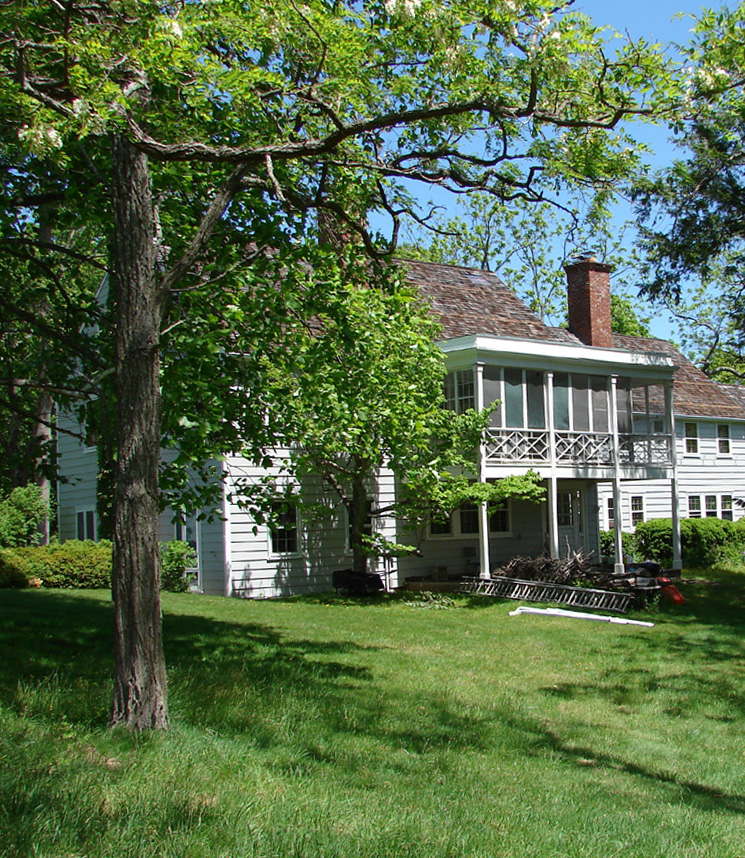
The outdoors is also more welcoming in summer,  if indoor and outdoor temperatures are similar. At our house in Cheshire, Connecticut, in lieu of air conditioning,  we use airflow drafts though open windows and screened doors, and  shade from an “umbrella” catalpa tree (pruned each fall) on the south side of the house.  Our extended family’s vacation house on Long Island is shaded to the south by two large hemlocks.  It has a long, narrow shape with many windows on both sides, allowing  for excellent cross ventilition. A screened second floor sleeping porch sleeps up to five (on cots) and is a pleasant place to spend time (read, sleep, or just rest and listen to the birds outside)  even in very hot, humid summer weather,  typical of Long Island.

Tomorrow, June 12th,  is the birthday of my brother, who believes lots of  work and play outdoors is the key to good health. We’ll be touring three demonstration alternative “organic” lawns in Newton, Massachusetts (Ecological Landscaping Assoc. http://www.ecolandscaping.org/), one with a solar house.   I expect to learn more ways to spend time outside on my piece of land, and have a fine-looking, dog-safe and wildlife-friendly, “organically ”  landscaped property – fodder for a future blog post. One way I know from childhood is to welcome black locust trees* and clover, which take nitrogen out of the air, by means of symbiotic rhizobium bacteria – free fertilizer! See photo below.

Sleeping porch: comfortable on hot LI nights- and days- in a pre-airconditioning house

*Black locust is on the invasive species lists of some states. It can spread aggressively, fertilize, and change,  sandy infertile natural habitats, as on the Cape in Massachusetts, but in a home landscape , in a pasture, or as a street tree, it is just fine, in my opinion (and that of other Long Island “natural resource professionals” and farmers).  Its abundant nectar is valuable for bees. Black locust  is in fact native to the US –  is from further south and west than Long Island and southern New England.